
Tag: mental-health

  • What Would I Do If I Lost All My Possessions?

    What Would I Do If I Lost All My Possessions?

    Daily writing prompt
    What would you do if you lost all your possessions?

    First, let’s be clear: this is about possessions — material things — not people. The way I understand the question family, friends, relationships aren’t included. Thank goodness. That alone changes the tone, because as long as I have the people I love, I’m not truly empty-handed.

    Still, if all my possessions suddenly vanished? My gut reaction would be panic. Imagine waking up and realizing everything you’ve worked for is gone: the car, the computer, the phone, the clothes, the bed, all of it. My face would probably drain white in that instant. But then the practical side of me kicks in: I still rent my apartment (not mine!), so the roof over my head remains. My job isn’t a “possession,” so I still have an income. With that, I could start over.

    Oddly enough, the more I think about it, the more I realize that very little of what I own is truly irreplaceable. All my smart devices? Backed up in the cloud. Photos? Digitized. Valuables? Painful, sure, but I could save up again. The biggest blow would actually be something like my retirement savings. Losing it would mean pushing retirement further out, maybe never reaching it at all.

    After the shock, I think I’d feel something surprising: freedom. We live in a world where we accumulate more and more, stuffing closets and drawers with things we barely touch. I know I’ve got plenty of junk that, if it disappeared tomorrow, I might not even notice. Losing it all might feel like a reset button, a forced way of asking, “What do I really need?”

    Of course, I’d replace the essentials first — clothes, toothbrush, bed. A bed is non-negotiable; good quality sleep is everything to me. Work tools would probably come from my company, so no stress there. And I’d rebuild slowly, but I wouldn’t rush to fill my place back up with stuff the way it is now.

    In the end, possessions don’t define me. They make life easier, sure, but they also weigh me down. What really lasts are the things computers, TVs, and couches can’t replace: relationships, skills, and experiences. If I lost my physical possessions, I think I’d eventually be okay. Maybe even better.

    Sometimes losing it all is the best way to remember what actually matters.
  • Overcoming Public Speaking Anxiety

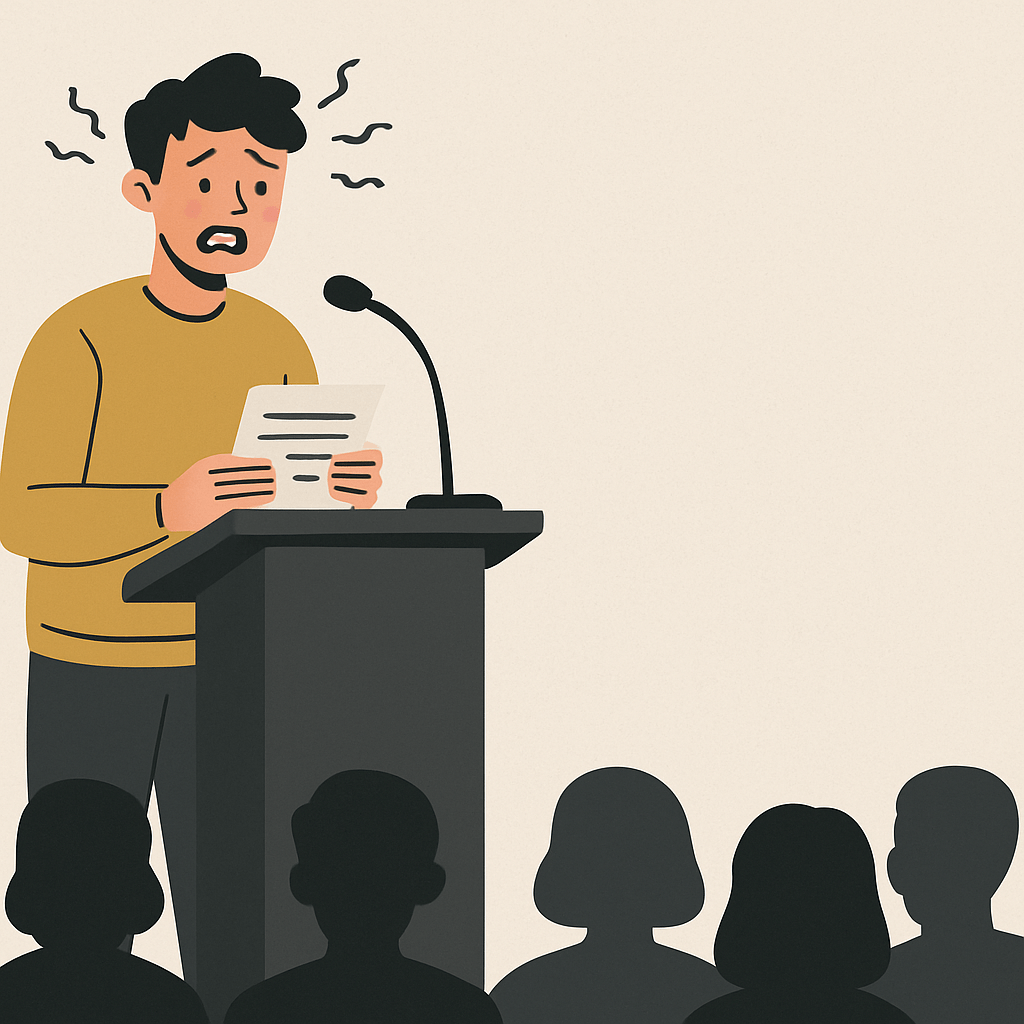
    Overcoming Public Speaking Anxiety

    When I first started out as a software engineer, I thought I could just keep my head down and focus on code. And for a while, that was true. But as I advanced in my career, I noticed the role was changing. Software engineering isn’t just about writing code—it’s also about communicating, collaborating, designing systems, and getting your ideas across clearly.

    That means that yes, public speaking becomes part of the job. Not in a “you’re on stage every week” kind of way, but in the occasional presentation, design review, or knowledge-sharing session. And because those opportunities are infrequent—especially for ICs—it’s hard to get into a rhythm. You’re often dusting off your presentation nerves every single time. Unless you’re at a higher level where you’re constantly in meetings, cross-team discussions, and stakeholder presentations, public speaking tends to feel more like a pop quiz than a practiced skill.

    I’ve always hated public speaking. But as I’ve grown in my career, I’ve been asked—sometimes “voluntold”—to speak up more often. So I’ve been learning to cope with the discomfort.

    (more…)
  • Staying Professional When It’s Easier Not To

    Staying Professional When It’s Easier Not To

    Early in my career, I worked closely with a colleague who, for reasons I’ll never fully understand, decided I was “their person.” Whenever something came up — a bug to chase down, a query to run, data to pull — they’d come straight to me. At first, it felt flattering. Being needed always carries a certain weight, especially when you’re new. But over time, the relationship started to drift into something a little more complicated.

    This colleague grew comfortable enough with me to share their unfiltered thoughts about others on the team. They would complain when people spoke up too much in meetings or grumble about how slowly someone worked. One day, they sent me a message complaining about a teammate taking too long to finish a task. And for the first time, I pushed back.

    I said: “She does take time, but she does complete her work.”

    Not exactly a bold speech, but it was enough to draw a line. The response I got back was a crunchy face emoji — one of those moments where you know instantly you’ve embarrassed someone. From that point on, they stopped venting to me about other people. But they also went cold. Conversations turned short. The easy rapport we’d built evaporated.

    (more…)