Tag: mental-health

  • The One Device We’d Be Better Off Without (Hint: You’re Probably Holding It)

    The One Device We’d Be Better Off Without (Hint: You’re Probably Holding It)

    What technology would you be better off without, why?

    If you asked me to list the technology that drains my happiness the most, my mind jumps to the usual suspects.

    I could blame social media and the infinite scroll that destroys my ability to focus. I could blame the loss of privacy from smart home devices listening in on my living room conversations. I could even blame workplace chat apps like Slack that keep me on high-alert.

    But those are just symptoms. If we really want to cure the digital fatigue we are all feeling, we have to look at the root cause. We have to look at the delivery mechanism.

    If I could un-invent one piece of technology, it would be the Smartphone.

    (more…)
  • Morning vs Night Person

    Morning vs Night Person

    Daily writing prompt
    Are you more of a night or morning person?

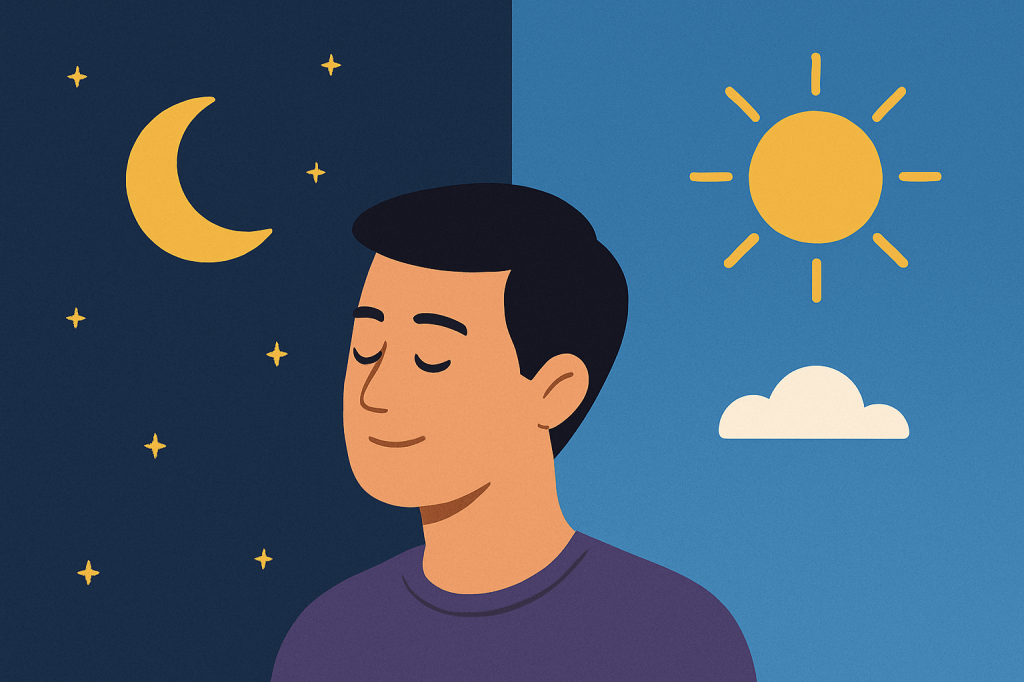
    If you had asked me in high school what kind of person I was, the answer would’ve been easy: a night owl. Staying up until 1 AM or 2 AM felt completely natural. There was something comforting about the quiet darkness, the glow of a screen, the freedom to watch movies or shows without interruption. Nights felt like my time.

    But somewhere along the way, things changed.

    (more…)
  • More Than Quiet

    More Than Quiet

    Daily writing prompt
    What’s something most people don’t know about you?

    Most people see me as the quiet one. When I’m in a large group, there are usually people who do most of the talking. In that situation, I usually keep quiet and like to listen. When I’m in a smaller group, or perhaps in a one on one situation, I like to participate in a balanced conversation.

    It’s not that I like being quiet, quiet the opposite. Like everyone else I have my opinions and thoughts. It’s just that I really dislike being interrupted I talk, so I try not to do that to others. These days, I find that people love to talk. They talk fast, and move from topic to topic. Sometimes I feel like if I want to contribute, I’d have to interrupt, but I try to avoid that.

    I can be talkative if I want, but I find myself not needing to as much. Maybe it’s age, but I find more value in listening now. Then there are those who love to dominate conversations, taking up most of the time. I find myself losing motivation to talk to those folks.

    People often misunderstand quiet people. Quiet people are usually seen as shy, even nice, or maybe dull. But quiet doesn’t mean we’re just sitting back. We think before we speak. We listen. And then we choose to talk.

    Advertisements
  • Trying Something New: Doing Things Alone in Public

    Trying Something New: Doing Things Alone in Public

    Daily writing prompt
    What could you try for the first time?

    I had to think hard before I could remember the last time I did something fun by myself — not errands, not a workout, just something for me. The best I could come up with was shooting hoops or maybe window shopping. It’s funny: for someone who enjoys being alone, I rarely go out alone.

    Maybe it’s because doing things solo costs money. When I’m with others, spending feels justified — events, movies, trips — but when it’s just me, I’d rather save the money. It feels selfish somehow, like I should save that money for something “real.”

    At home, I’m comfortable alone. I work out, watch sports, read, and stream shows — things that keep my mind busy. But being alone in the world feels different. It’s not just quiet; it’s exposure. I envy people who can eat out or watch a movie solo without caring who notices. They seem confident in their own company.

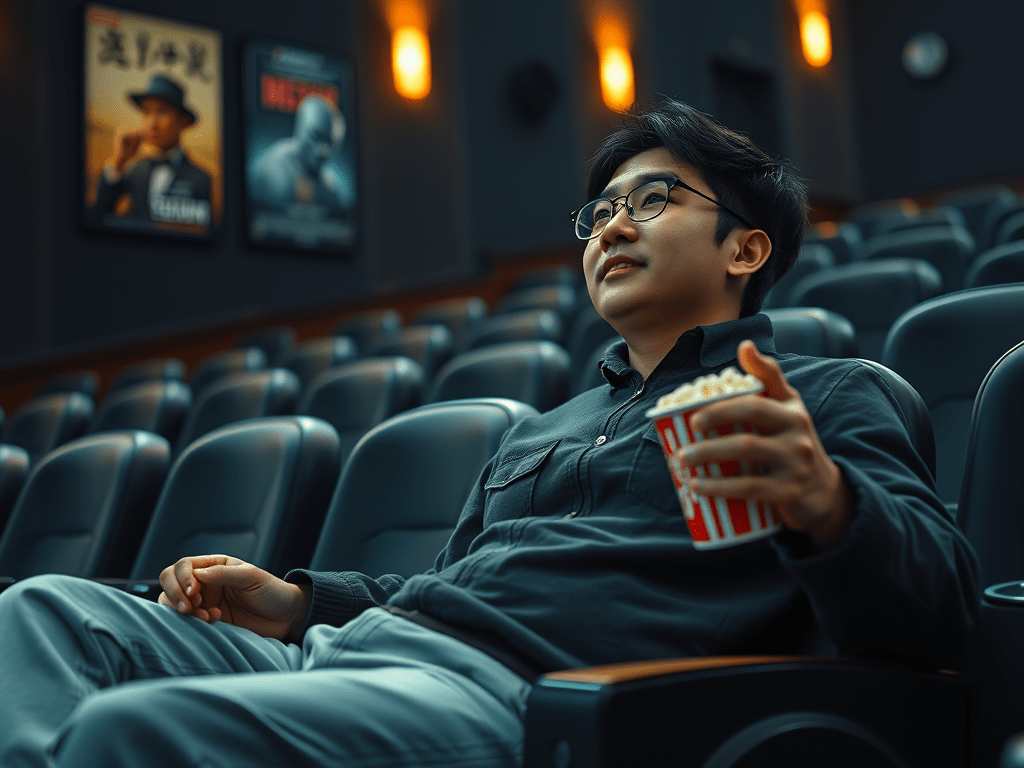
    If I were to start, I’d keep it simple — go see a movie alone. It’s low effort and doesn’t require small talk. Still, I know I’d regret it and think about how I could’ve just watched something at home. But there’s something appealing about the freedom — no coordinating, no compromises, no worrying about anyone else’s preferences. Just all me, doing what I want.

    That freedom is what draws me to it. But there’s also a small fear: that people might see me sitting alone and think it’s sad. Maybe that comes from childhood — the instinct to not look “left out.”

    Maybe the trick is to focus on the moment — the movie, the meal, the game — and stop caring about others. Comfort probably starts there: when you stop needing your solitude to be hidden.

    Doing things solo doesn’t have to mean isolation; it can mean discovery. Maybe there are parts of me I haven’t met yet — interests, capabilities — waiting for me to start.

    Advertisements
  • Finding My Center: How Balance Defines My Life

    Finding My Center: How Balance Defines My Life

    Daily writing prompt
    What principles define how you live?

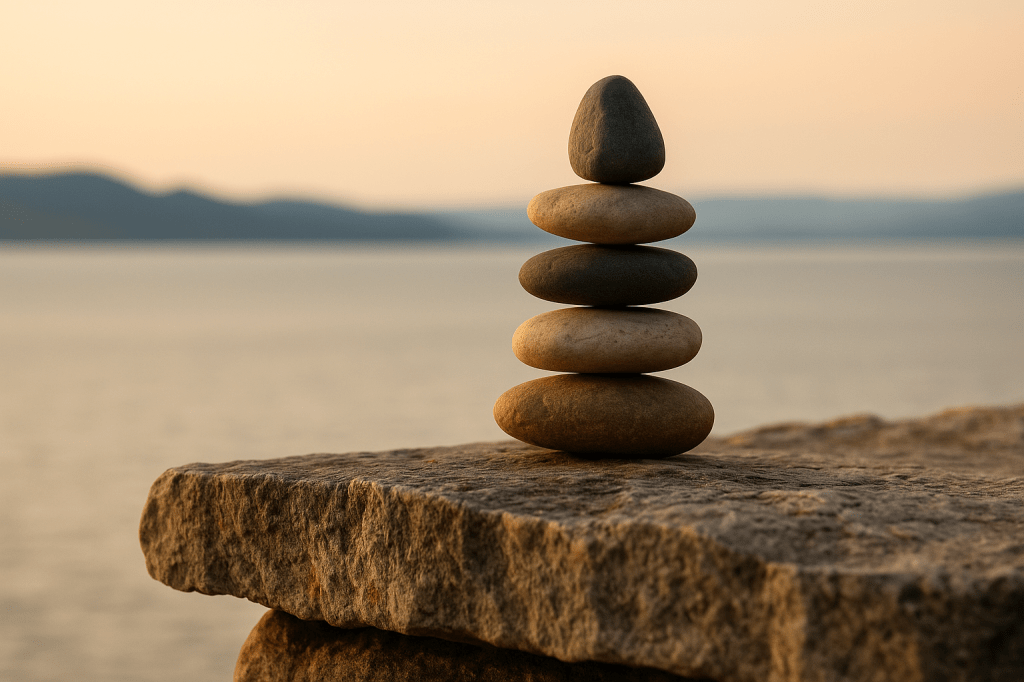
    When I think of balance, I imagine life in perfect harmony. Everything I do has a counterbalance — a way to even things out. If I work hard, I make sure to take time to enjoy life. If I indulge, I do it in moderation. I love food, but I eat moderately and work out to balance it. For me, balance isn’t about cutting out the things I enjoy — it’s about creating equilibrium so nothing outweighs the rest.

    Balance, to me, applies to everything — time, energy, and emotion. If I spend time on something, I try to counter it. If I eat junk food, I make up for it with healthy choices. When I spend energy, I make sure to rest. When I face chaos, I seek peace. It’s a constant back-and-forth. Life will always throw me off-center, but being mindful helps me find my way back.

    A balanced day probably looks boring. I work out in the morning to spend energy, then eat protein to replenish. I go to work and make sure to take breaks. I eat proper meals to refuel throughout the day, and when the day ends, I sleep to recharge. I try to split my time between work, myself, and my family — and I try to give as much as I receive. Again, boring.

    I can tell when I’m out of balance. My body lets me know. I’ll feel off — like I have too much of something or not enough. Maybe I’ve been too busy, or too lazy. Too stressed, or too relaxed. The imbalance reveals itself in small ways — in my mood, my focus, or my energy.

    Keeping balance is really about maintaining a routine — and recalibrating when life throws me off. The hardest part IMO is work, because people are unpredictable and stress comes out of nowhere. When that happens, I have to consciously step back and find ways to destress, to pull myself back toward center. Sometimes that means making changes. Chasing balance shouldn’t mean forcing yourself to do things you hate. If something that once felt “balanced” starts feeling draining, that’s a sign it’s time to change the routine — switch jobs, try a new gym, find new motivation.

    I’ve learned most of this through experience. No one taught me about balance; I just noticed that when things go out of balance, something always gives — your body, your mindset, your energy. Over time, I’ve realized that moderation is the simplest way to stay balanced. Don’t do too much of anything, and life tends to find its own rhythm again.

    When I’m balanced, I feel content — like I’m giving the right amount in every area of life. It helps me show up for others, whether that’s family, friends, or coworkers. Balance makes space for connection. And I don’t think balance is something you ever fully achieve, I think it’s something you continually adjust.

    Advertisements
  • What I’ve Been Putting Off Doing

    What I’ve Been Putting Off Doing

    Daily writing prompt
    What have you been putting off doing? Why?

    For most of my adult life, I’ve moved homes every couple of years — dorms, student apartments, new places after getting married. Each move gave me a natural reset: a chance to throw things away, start fresh, and only bring what really mattered.

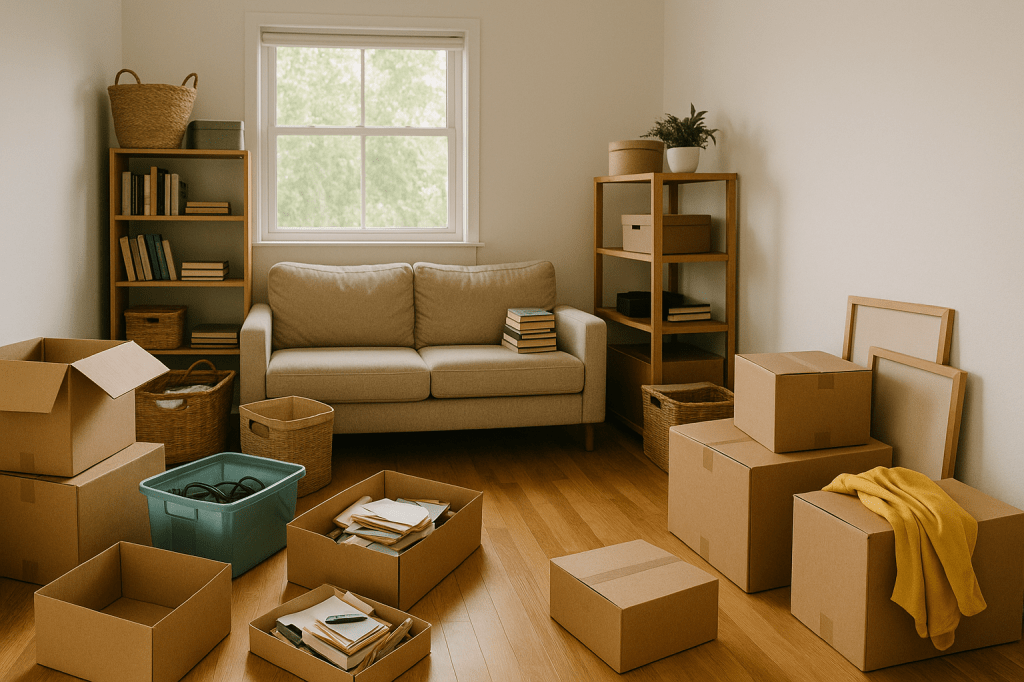
    But my current place? I’ve lived here for eight years now. And in that time, stuff has piled up. Not just mine, but my family’s too. We’ve optimized for space — used vertical storage, rearranged furniture, and done small rounds of decluttering — but the accumulation never stops. Our kids are growing up, collecting their own things, and slowly, the floors are starting to disappear.

    It’s not that we live in chaos — we have a cleaning lady who helps keep things tidy — but with nowhere to put things, “clean” only lasts about a day. Every closet, hallway cabinet, and drawer is packed with items we don’t use but can’t seem to let go of. Some hold sentimental value. Others are “just in case” items — things I’d hate to throw out only to need later. And then there are old photos, already digitized, but impossible to toss because they still feel like little time capsules.

    Part of me knows what I need to do: go through everything, one weekend at a time. But between work, workouts, chores, and life, it’s easier to keep putting it off. And maybe, deep down, I’m not just putting off cleaning — I’m putting off letting go.

    A friend once told me he throws away everything he doesn’t actively use. “If I ever need it again,” he said, “I’ll just buy it back. Space is worth more.” I’ve thought about that a lot lately. Because what I really want isn’t a new house — it’s space.

    I want to open a cabinet and actually have room inside. I want to walk into our home and feel lightness, not clutter. Maybe this isn’t just a cleaning project — maybe it’s a reset. A reminder that, in the end, we don’t take any of it with us. So why carry so much of it now?

    Advertisements
  • The Hardest Goal I’ve Ever Set

    The Hardest Goal I’ve Ever Set

    Daily writing prompt
    What was the hardest personal goal you’ve set for yourself?

    I’ve gone through this phase a few times in my career—the moment I realize I’m stuck. I’d had good jobs, good enough pay, and steady growth through referrals and word of mouth. Networking carried me far, but it also trapped me. My opportunities depended on who I knew, not necessarily what I knew. At some point, I wanted to be able to stand on my own.

    That’s when I set what turned out to be the hardest personal goal I’ve ever tackled: upskilling myself.

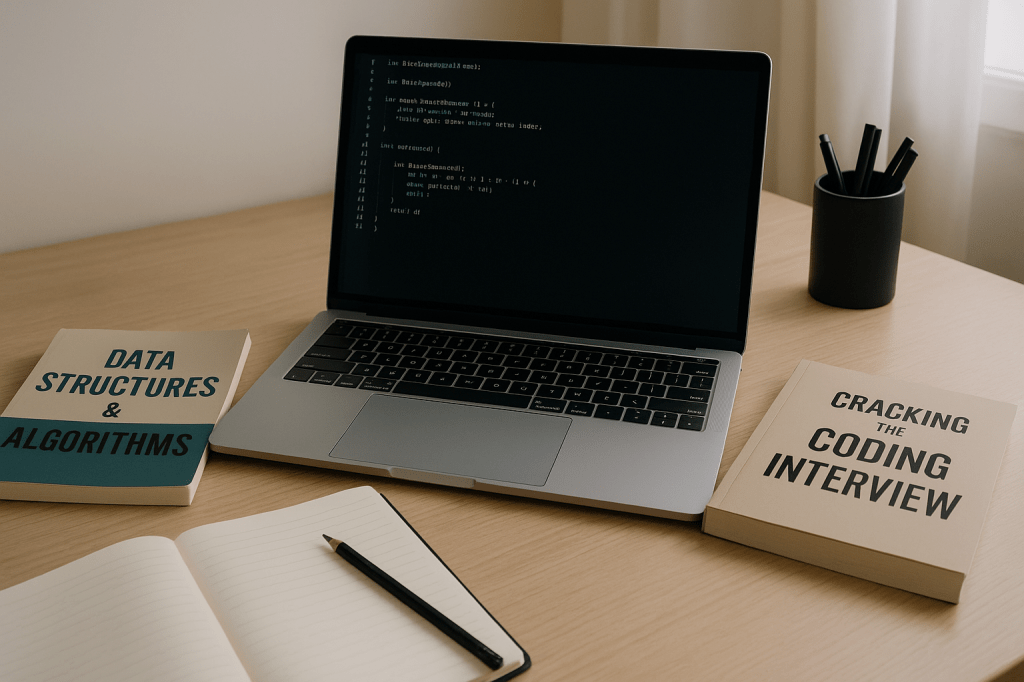
    Back when Hackerrank was new and Leetcode was just starting to spread, I picked up one of those “cracking the interview” books and dove in. I wanted to sharpen my CS fundamentals—algorithms, data structures, systems design—all the things I barely touched since college but that interviews love to test.

    I found the process surprisingly empowering. The platforms gamified the grind—daily challenges, streaks, leaderboards—and it felt like building muscle memory for my brain. But what made it truly hard was discipline. I had a family, limited time, and a full-time job, yet I spent hours every day grinding problems, revisiting old concepts, and learning to think from first principles again.

    My wife was incredibly supportive, and that made a huge difference. Having that kind of backing made it easier to push through the nights when I was tired or second-guessing myself.

    The breakthrough came when I started walking into interviews with confidence. Instead of panic, I felt calm. I could think clearly, explain clearly, and problem-solve with structure. Eventually, I landed great jobs—multiple offers, even—and for the first time, I could choose where to go next. That feeling was priceless.

    Looking back, it wasn’t just about learning algorithms or passing interviews. It was about proving that I could still grow—that I could bet on myself, even after years in the field. It taught me that hard goals don’t stay hard forever. Once you build momentum, discipline becomes habit, and habit becomes strength.

    If I could talk to my younger self, I’d tell him this: you’re capable of more than you think, but you have to commit before you feel ready. The tools are out there, the path is clear—you just have to start walking it.

    Advertisements
  • Working Out as My Favorite Pastime

    Working Out as My Favorite Pastime

    Daily writing prompt
    What is your favorite hobby or pastime?

    I used to roll my eyes when my dad talked about eating healthy and taking care of my body. Now that I’m older I catch myself doing the same: watching what I eat, exercising, and sleeping well. I can’t believe I’m becoming more like my dad.

    I was active as a kid, taking taekwondo like my son now, and in college I started lifting and never stopped. A few years before COVID I got more serious, but it became more real starting the summer of 2023. I had just flow back from Korea when I felt like I was having a heart attack. That was the moment when I decided I had to turn things around.

    These days I’m addicted to my routine: wake up early for black coffee, massage and stretch my body, warm shower to wake up and warm up. Then it’s 45 minutes of HIIT class at Basecamp. I love the feeling during my workouts when my lungs burn and my body is pumped; I feel strong, young, alive. If I skip my routine, I feel… off. Sore for the entire day.

    After my class, I take my protein mixed with creatine, hit a cold shower as my cryotherapy treatment, and I make sure to get enough sleep at night. Eight hours if possible. Of course, working out every single day (or I try to) like I do isn’t the textbook definition of “healthy”, and I’ve made trade-offs to keep going. I used to be a night owl; now I hit the sack early. I cut back on drinking and junk food. To me, it’s worth it.

    Fitness taught me the simplest rule: if you want a long, healthy life, you have to take care of yourself. No cheat codes. Just reps. Level up, again and again.

    Advertisements
  • Skill I Would Like to Learn

    Skill I Would Like to Learn

    What skill would you like to learn?

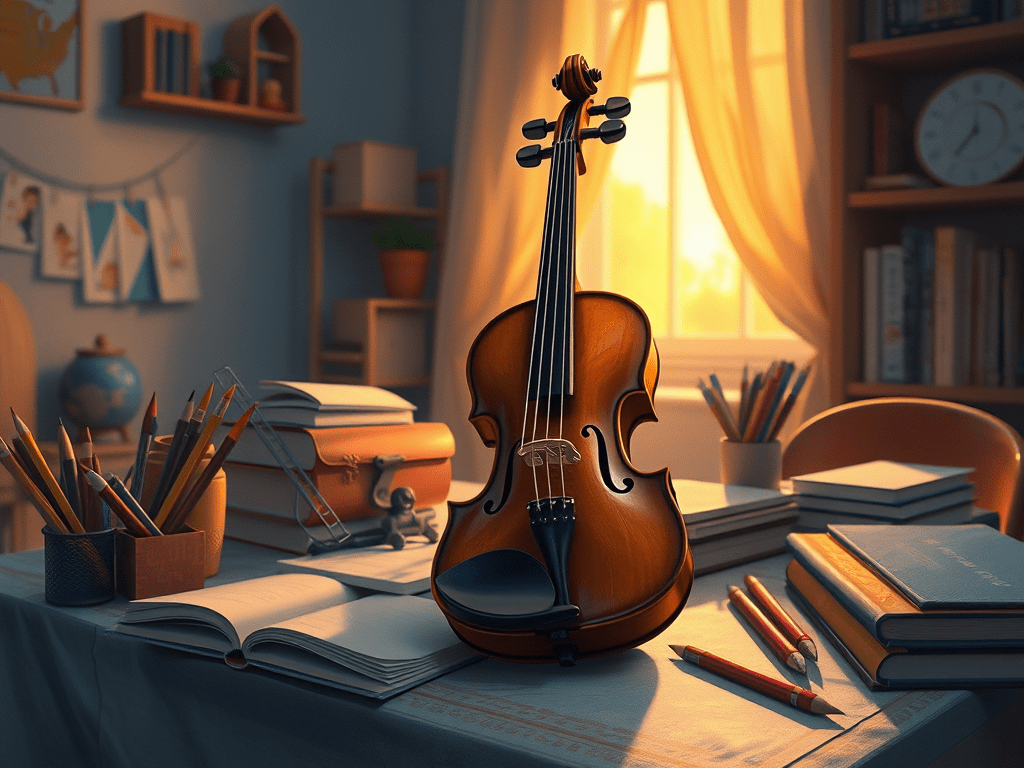
    Sometimes I think about all the skills I wished I had learned growing up. I was a creative kid, always curious about how things worked and eager to make things of my own — to draw, to play the violin, to build robots, to write stories. My parents never quite understood that side of me. They wanted me to focus on academics, to walk a path that was safe and respectable. So I did, even if it meant leaving behind some of those early dreams.

    As an adult, I still feel that small gap inside me — a reminder of the creative boy who wanted to explore and make things just for the joy of it. Life has a way of filling up, though. I have a full-time job, two kids, and an apartment where the sound of a beginner violinist might drive the neighbors crazy. It’s not easy to carve out time for side hobbies anymore. Still, if I ever had more space in my life, I think I’d like to learn the violin. There’s something about its sound — beautiful, soulful — that’s always spoken to me.

    I can imagine the benefits of learning it: using music to unwind after a long day, meeting others who share the same passion, maybe even teaching kids someday. But more than that, it would feel like reclaiming a piece of the creative spark I had as a child. I’ve realized that it’s not too late to pick up new (or old?) dreams — they don’t disappear, they just wait quietly for their turn.

    Some dreams, thankfully, did come true. I grew up loving computers, and I became a software engineer — a career that still lets me create and solve problems in my own way. I even get to work at a video game company, something my younger self would have thought was pure fantasy. Maybe that’s proof enough that the other dreams aren’t so far-fetched after all.

    When I think about the skills I’d like to learn, it’s not really about the violin or writing a book or building a robot anymore. It’s about keeping that creative spark alive, the one that’s been with me since childhood. Maybe one day, when life slows down a little, I’ll finally give that boy’s imagination the time it always deserved.

    Advertisements
  • Learning to Live with Feeling Out of Place

    Learning to Live with Feeling Out of Place

    Daily writing prompt
    Tell us about a time when you felt out of place.

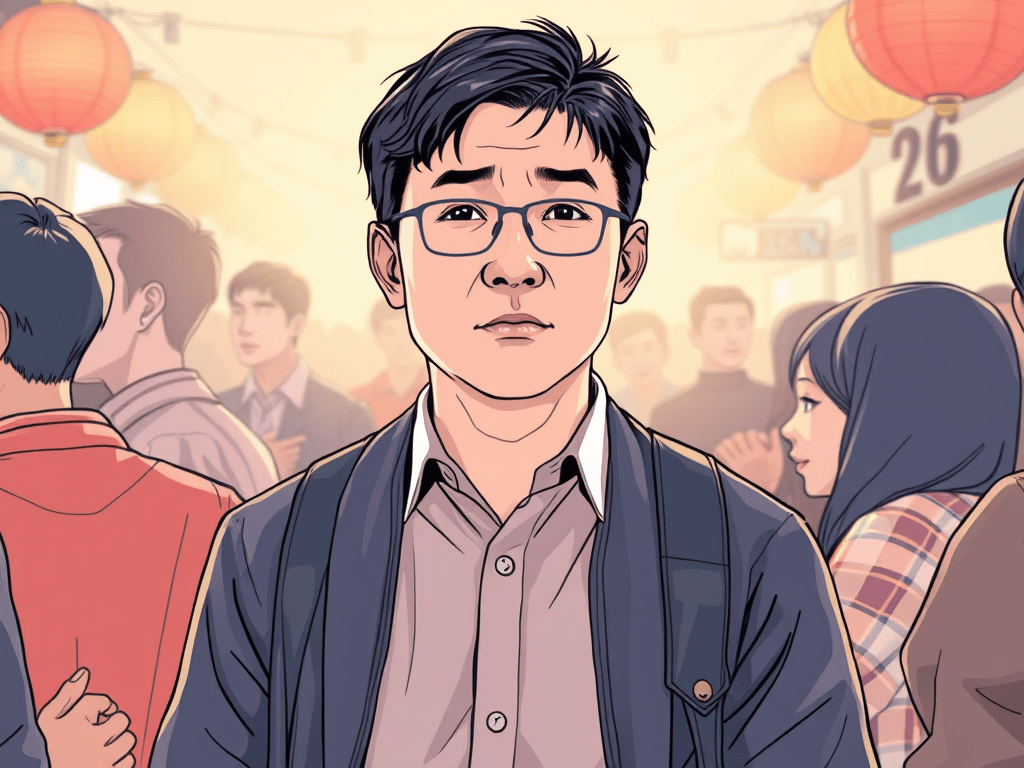
    If I look back on my life, one theme that pops up again and again is the feeling of being out of place. It’s shown up in different ways over the years—sometimes subtle, sometimes painfully obvious—but it’s always been there in one form or another.

    When I was a kid, I moved from my place of birth Paraguay to the U.S., and then later from a city to another city. Both were big shifts, and both left me scrambling to fit in. It’s not easy as a child to navigate a new culture, new classmates, and a different way of doing things. You learn quickly that little differences—what you eat, how you talk, what you know or don’t know—can make you stand out. And when you’re young, standing out doesn’t always feel like a good thing.

    That feeling carried into my work years, too. There’s a certain comfort in working with the same people for a long time, building rhythms and shared understandings. But when you suddenly join a new team, that comfort disappears, and you feel like the odd one out. Post-COVID, it hit me in a new way: walking back into an office after years of remote work felt strange and foreign. Even something as simple as going to a team outing made me aware that I’m now much older than many of my coworkers. That’s not something I used to notice before, but suddenly it stood out.

    And then there’s my personal life. My wife is great at connecting with other parents through our kids’ school activities. I usually leave that to her, and she thrives in those social circles. But when I tag along to a parent gathering, I can feel that familiar awkwardness creep in. She knows people, and I don’t. She’s at ease, and I’m not. It’s not a terrible feeling, but it’s there—the sense that I don’t quite belong.

    Over time, though, I’ve learned not to fight it so much. Being out of place isn’t something you can always fix, and honestly, you don’t always need to. Sometimes I take the awkwardness in stride. Other times, I just avoid the situations where I know I’ll feel that way, and that’s fine too. What I’ve come to realize is that feeling out of place is simply part of life. Everyone experiences it. And once you accept that, it doesn’t feel so heavy anymore.

    It’s not about eliminating the discomfort—it’s about recognizing it, and living with it.

    Advertisements