Category: writing

  • Skill I Would Like to Learn

    Skill I Would Like to Learn

    What skill would you like to learn?

    Sometimes I think about all the skills I wished I had learned growing up. I was a creative kid, always curious about how things worked and eager to make things of my own — to draw, to play the violin, to build robots, to write stories. My parents never quite understood that side of me. They wanted me to focus on academics, to walk a path that was safe and respectable. So I did, even if it meant leaving behind some of those early dreams.

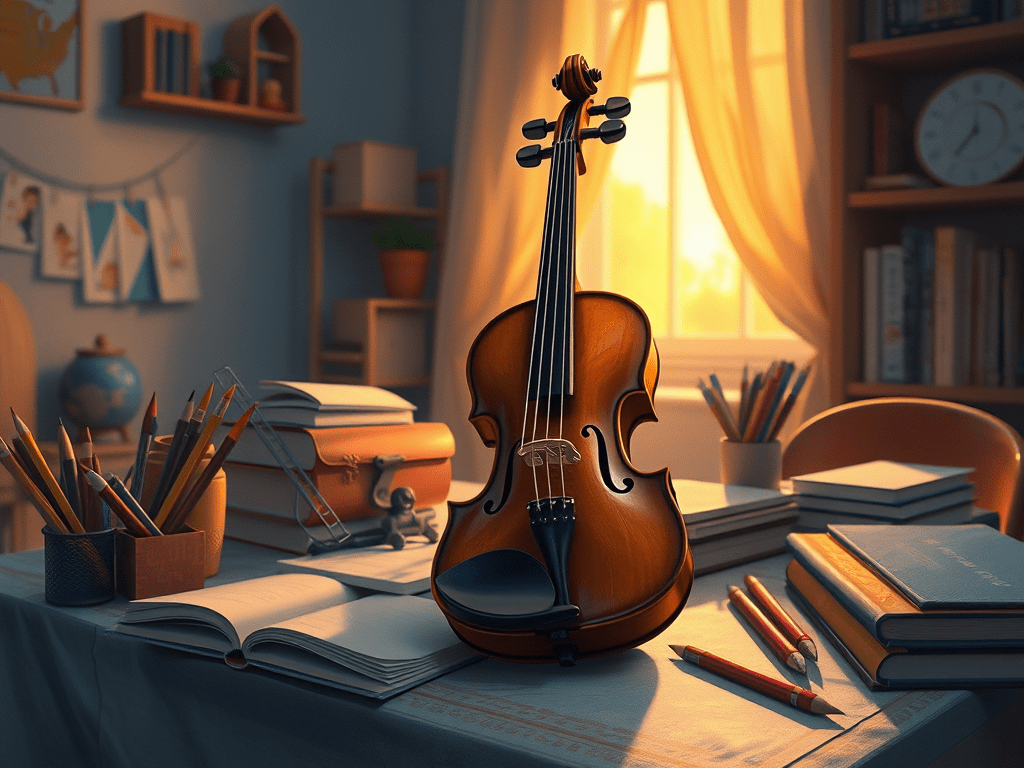
    As an adult, I still feel that small gap inside me — a reminder of the creative boy who wanted to explore and make things just for the joy of it. Life has a way of filling up, though. I have a full-time job, two kids, and an apartment where the sound of a beginner violinist might drive the neighbors crazy. It’s not easy to carve out time for side hobbies anymore. Still, if I ever had more space in my life, I think I’d like to learn the violin. There’s something about its sound — beautiful, soulful — that’s always spoken to me.

    I can imagine the benefits of learning it: using music to unwind after a long day, meeting others who share the same passion, maybe even teaching kids someday. But more than that, it would feel like reclaiming a piece of the creative spark I had as a child. I’ve realized that it’s not too late to pick up new (or old?) dreams — they don’t disappear, they just wait quietly for their turn.

    Some dreams, thankfully, did come true. I grew up loving computers, and I became a software engineer — a career that still lets me create and solve problems in my own way. I even get to work at a video game company, something my younger self would have thought was pure fantasy. Maybe that’s proof enough that the other dreams aren’t so far-fetched after all.

    When I think about the skills I’d like to learn, it’s not really about the violin or writing a book or building a robot anymore. It’s about keeping that creative spark alive, the one that’s been with me since childhood. Maybe one day, when life slows down a little, I’ll finally give that boy’s imagination the time it always deserved.
    Advertisements
  • The Gray Areas Between Good and Bad

    The Gray Areas Between Good and Bad

    Daily writing prompt
    What’s a topic or issue about which you’ve changed your mind?

    I used to believe that the definitions of good and bad were clear and absolute — set in stone, almost like universal truths everyone agreed on. Stealing was bad, helping was good, and that was that. Of course, I knew there were exceptions — like those moral thought experiments where you’re forced to choose between two bad outcomes (google “the trolley problem”) — but I still thought right and wrong were mostly black and white.

    Over the past few years, though, I’ve started to see how blurry those lines can be. Between world events, social movements, and how differently people interpret the same piece of news, I realized that our ideas of good and bad aren’t always shared. Two people can look at the same situation and come away with completely opposite judgments, each believing they’re standing for what’s right.

    This shift didn’t happen overnight. I think the pandemic gave me time to slow down and pay attention — to realize how much perspective shapes belief. I used to think morality was simple; now I see it’s often shaped by culture, experience, and even the communities we’re part of.

    In some ways, I feel more open-minded and empathetic now. But it’s also tiring — trying to understand everyone’s point of view can be overwhelming. I’m learning that being thoughtful doesn’t mean I have to stretch myself thin to accommodate every perspective. Sometimes, it’s okay to protect my own peace.

    Maybe that’s the biggest change of all: realizing that understanding others doesn’t require losing myself in the process.

    Advertisements
  • Learning to Live with Feeling Out of Place

    Learning to Live with Feeling Out of Place

    Daily writing prompt
    Tell us about a time when you felt out of place.

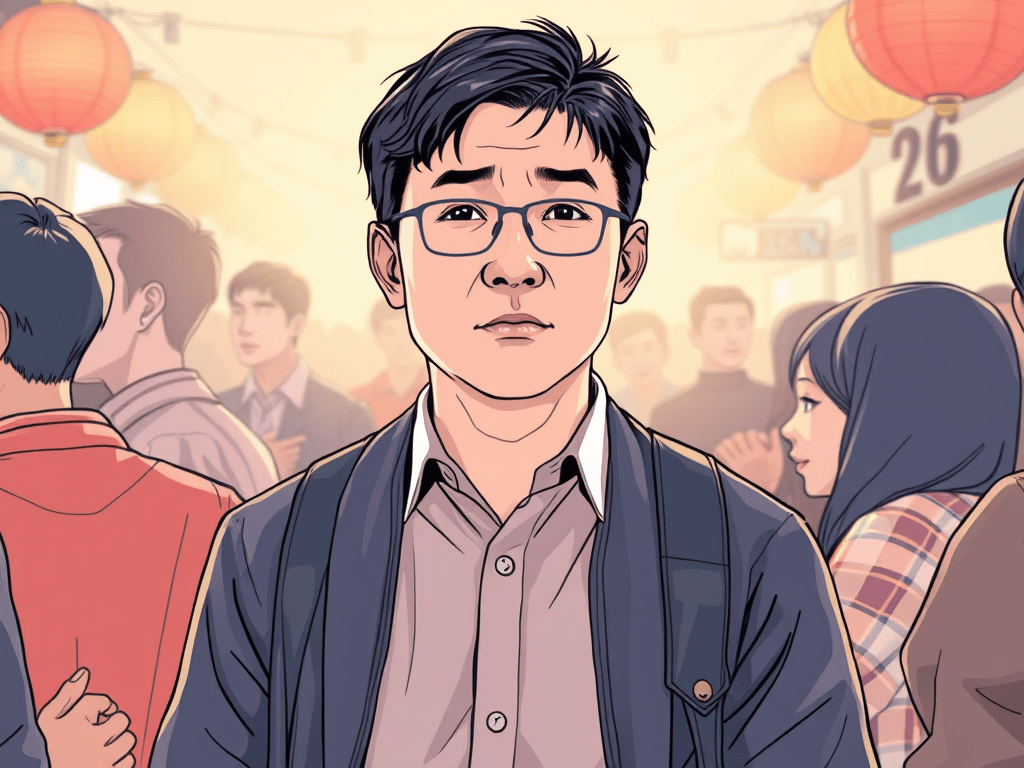
    If I look back on my life, one theme that pops up again and again is the feeling of being out of place. It’s shown up in different ways over the years—sometimes subtle, sometimes painfully obvious—but it’s always been there in one form or another.

    When I was a kid, I moved from my place of birth Paraguay to the U.S., and then later from a city to another city. Both were big shifts, and both left me scrambling to fit in. It’s not easy as a child to navigate a new culture, new classmates, and a different way of doing things. You learn quickly that little differences—what you eat, how you talk, what you know or don’t know—can make you stand out. And when you’re young, standing out doesn’t always feel like a good thing.

    That feeling carried into my work years, too. There’s a certain comfort in working with the same people for a long time, building rhythms and shared understandings. But when you suddenly join a new team, that comfort disappears, and you feel like the odd one out. Post-COVID, it hit me in a new way: walking back into an office after years of remote work felt strange and foreign. Even something as simple as going to a team outing made me aware that I’m now much older than many of my coworkers. That’s not something I used to notice before, but suddenly it stood out.

    And then there’s my personal life. My wife is great at connecting with other parents through our kids’ school activities. I usually leave that to her, and she thrives in those social circles. But when I tag along to a parent gathering, I can feel that familiar awkwardness creep in. She knows people, and I don’t. She’s at ease, and I’m not. It’s not a terrible feeling, but it’s there—the sense that I don’t quite belong.

    Over time, though, I’ve learned not to fight it so much. Being out of place isn’t something you can always fix, and honestly, you don’t always need to. Sometimes I take the awkwardness in stride. Other times, I just avoid the situations where I know I’ll feel that way, and that’s fine too. What I’ve come to realize is that feeling out of place is simply part of life. Everyone experiences it. And once you accept that, it doesn’t feel so heavy anymore.

    It’s not about eliminating the discomfort—it’s about recognizing it, and living with it.

    Advertisements
  • What Would I Do If I Lost All My Possessions?

    What Would I Do If I Lost All My Possessions?

    Daily writing prompt
    What would you do if you lost all your possessions?

    First, let’s be clear: this is about possessions — material things — not people. The way I understand the question family, friends, relationships aren’t included. Thank goodness. That alone changes the tone, because as long as I have the people I love, I’m not truly empty-handed.

    Still, if all my possessions suddenly vanished? My gut reaction would be panic. Imagine waking up and realizing everything you’ve worked for is gone: the car, the computer, the phone, the clothes, the bed, all of it. My face would probably drain white in that instant. But then the practical side of me kicks in: I still rent my apartment (not mine!), so the roof over my head remains. My job isn’t a “possession,” so I still have an income. With that, I could start over.

    Oddly enough, the more I think about it, the more I realize that very little of what I own is truly irreplaceable. All my smart devices? Backed up in the cloud. Photos? Digitized. Valuables? Painful, sure, but I could save up again. The biggest blow would actually be something like my retirement savings. Losing it would mean pushing retirement further out, maybe never reaching it at all.

    After the shock, I think I’d feel something surprising: freedom. We live in a world where we accumulate more and more, stuffing closets and drawers with things we barely touch. I know I’ve got plenty of junk that, if it disappeared tomorrow, I might not even notice. Losing it all might feel like a reset button, a forced way of asking, “What do I really need?”

    Of course, I’d replace the essentials first — clothes, toothbrush, bed. A bed is non-negotiable; good quality sleep is everything to me. Work tools would probably come from my company, so no stress there. And I’d rebuild slowly, but I wouldn’t rush to fill my place back up with stuff the way it is now.

    In the end, possessions don’t define me. They make life easier, sure, but they also weigh me down. What really lasts are the things computers, TVs, and couches can’t replace: relationships, skills, and experiences. If I lost my physical possessions, I think I’d eventually be okay. Maybe even better.

    Sometimes losing it all is the best way to remember what actually matters.

  • My Life Without a Computer

    My Life Without a Computer

    Daily writing prompt
    Your life without a computer: what does it look like?

    If I’m being honest, my life without a computer would look completely different. And I don’t just mean a Windows PC or a Mac — let’s lump in smartphones, tablets, and all the other smart devices too. Otherwise, it’s kind of boring, right?

    I rely on computers for everything — work, communication, entertainment, even creativity. Without one, I basically wouldn’t have my career. I’m a software engineer, so no computer means no code, no programs, no job. I probably would’ve ended up as an author or something like that, which was my original dream growing up.

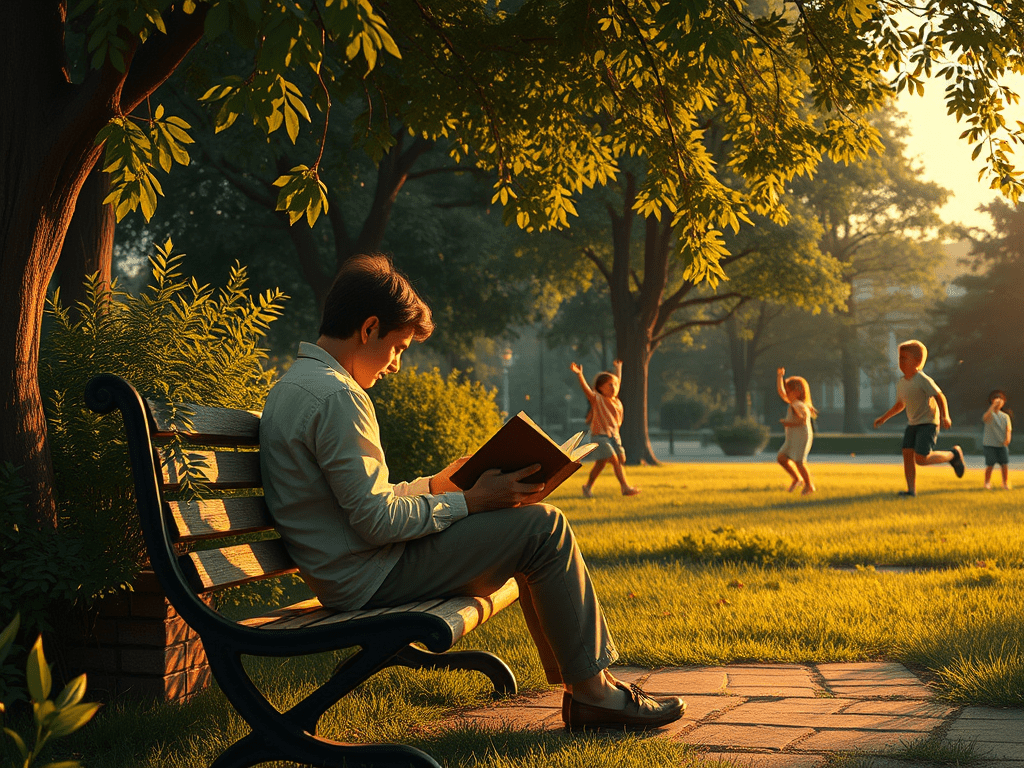
    But here’s the thing: life without a computer wouldn’t necessarily be all bad. The last time I didn’t own one was in the early ’90s, when I was just a kid. Life was so much simpler then. If you wanted to see friends, you arranged a time and place — and actually showed up. If someone called your house and you weren’t home, you just missed the call. You memorized phone numbers. You went outside for fun. And honestly? There were no endless streams of short video clips melting your attention span.

    My free time would probably shift a lot. Maybe more TV, more books, more family events. I’d be more active. Probably healthier too. Sure, I’d miss the digital world if computers suddenly vanished one day, but if they had never been invented at all, I’d just lean into analog hobbies and not know what I was missing.

    And stress? I bet I’d have less of it. Computers — and especially the internet — made life faster, noisier, and more anxious. Sometimes I think we all need a break from screens just to breathe a little easier.

    So is life without a computer a step backward? Yeah, kind of. But it’s also a rediscovery of simplicity. Some days I really do miss those simpler, pre-computer days.

    Funny how thinking about this makes me feel old. But maybe that’s just the nostalgia talking.