Author: johnro

  • When I First Felt Like a Grown-Up

    When I First Felt Like a Grown-Up

    Daily writing prompt
    When was the first time you really felt like a grown up (if ever)?

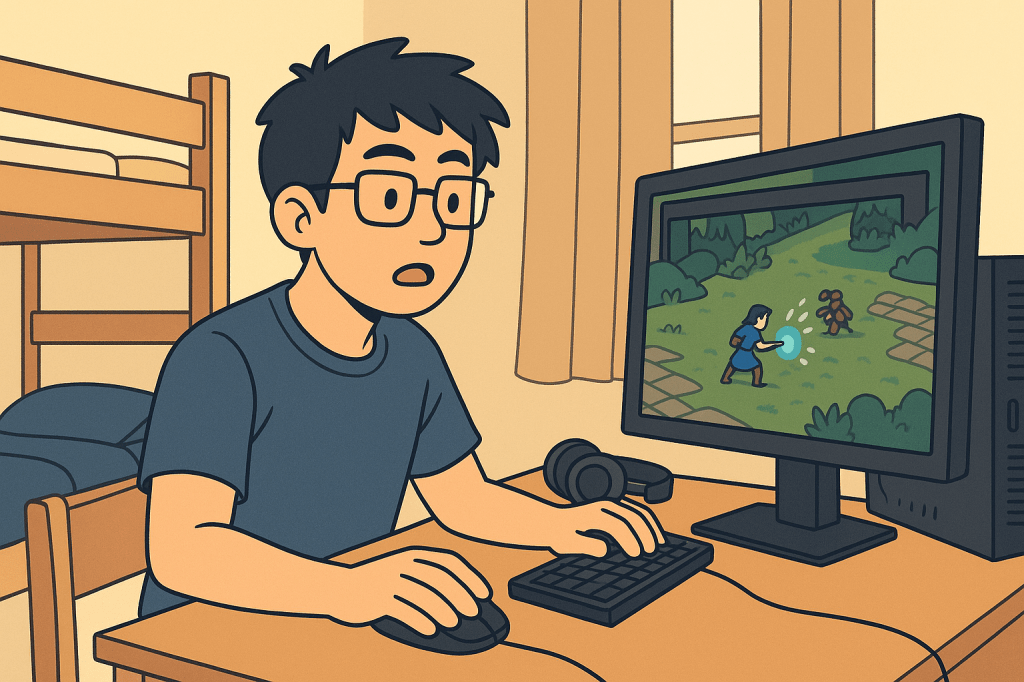
    The first time I really felt like a grown-up wasn’t some grand milestone. It wasn’t landing a job, getting married, or becoming a dad. It was the first night I moved into my college dorm—completely free, finally on my own.

    I remember setting up my computer, feeling independent and responsible for the first time. Meals? My responsibility. Laundry? My responsibility. Sleep schedule? My problem. And what did I do with all that newfound freedom? I fired up Diablo II. My sorceress’s spell sounds echoed down the dorm hallway—loud enough for everyone to hear. Looking back, I can’t believe I did that. So embarrassing.

    That moment was my first glimpse of adulthood: freedom mixed with clueless enthusiasm.

    Years later, the “grown-up” moments kept leveling up. Getting my own place after college. Paying rent. Starting my career. Doing taxes, paying bills, keeping food on the table—all the standard side quests of adult life. It’s tiring, but also strangely rewarding. There’s comfort in the rhythm of responsibility.

    Now I’m the husband, the father, the guy who makes sure things keep running. My younger self would probably see me and think, “Wow, I became my dad.” And he’d be right. The difference is, I understand now why my dad always looked tired—but also why he kept going.

    I still don’t always feel grown up. I go through the motions: work, family, bills, repeat. Sometimes I wonder if anyone truly feels like one, or if we’re all just older kids pretending, learning as we go. Maybe being grown up isn’t about feeling like one—it’s about doing what needs to be done, even when you’d rather be doing something else.
    Advertisements
  • The Hardest Goal I’ve Ever Set

    The Hardest Goal I’ve Ever Set

    Daily writing prompt
    What was the hardest personal goal you’ve set for yourself?

    I’ve gone through this phase a few times in my career—the moment I realize I’m stuck. I’d had good jobs, good enough pay, and steady growth through referrals and word of mouth. Networking carried me far, but it also trapped me. My opportunities depended on who I knew, not necessarily what I knew. At some point, I wanted to be able to stand on my own.

    That’s when I set what turned out to be the hardest personal goal I’ve ever tackled: upskilling myself.

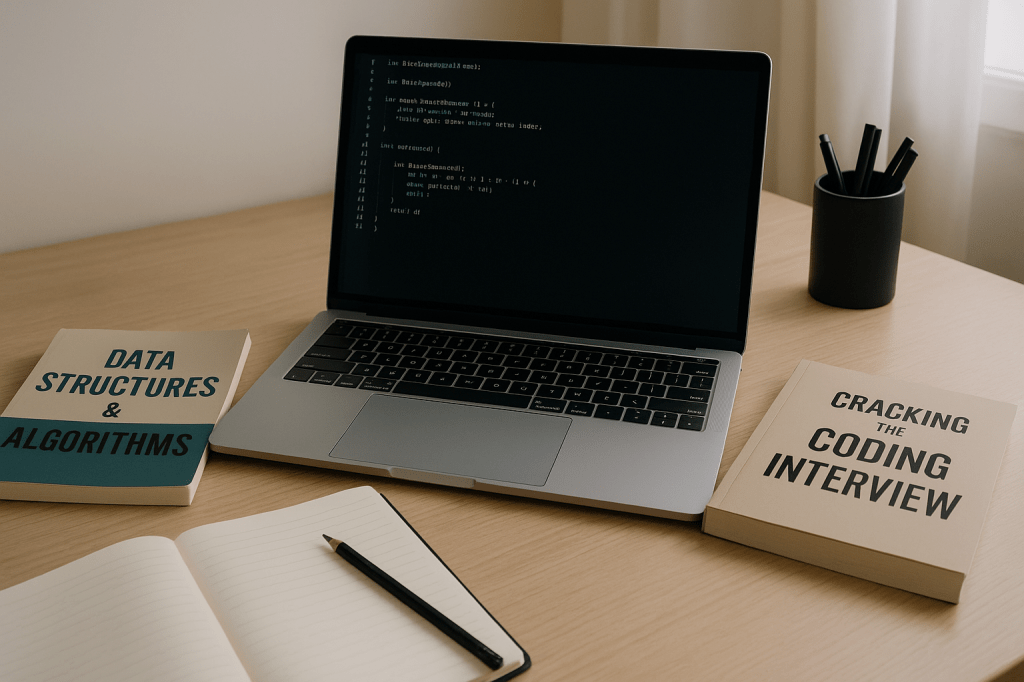
    Back when Hackerrank was new and Leetcode was just starting to spread, I picked up one of those “cracking the interview” books and dove in. I wanted to sharpen my CS fundamentals—algorithms, data structures, systems design—all the things I barely touched since college but that interviews love to test.

    I found the process surprisingly empowering. The platforms gamified the grind—daily challenges, streaks, leaderboards—and it felt like building muscle memory for my brain. But what made it truly hard was discipline. I had a family, limited time, and a full-time job, yet I spent hours every day grinding problems, revisiting old concepts, and learning to think from first principles again.

    My wife was incredibly supportive, and that made a huge difference. Having that kind of backing made it easier to push through the nights when I was tired or second-guessing myself.

    The breakthrough came when I started walking into interviews with confidence. Instead of panic, I felt calm. I could think clearly, explain clearly, and problem-solve with structure. Eventually, I landed great jobs—multiple offers, even—and for the first time, I could choose where to go next. That feeling was priceless.

    Looking back, it wasn’t just about learning algorithms or passing interviews. It was about proving that I could still grow—that I could bet on myself, even after years in the field. It taught me that hard goals don’t stay hard forever. Once you build momentum, discipline becomes habit, and habit becomes strength.

    If I could talk to my younger self, I’d tell him this: you’re capable of more than you think, but you have to commit before you feel ready. The tools are out there, the path is clear—you just have to start walking it.

    Advertisements
  • If I Couldn’t Fail

    If I Couldn’t Fail

    Daily writing prompt
    What’s something you would attempt if you were guaranteed not to fail.

    The easy answer would be to win the lottery. If I’m guaranteed not to fail, that means I’d win, right? But that feels like cheating. The premise of this question already breaks reality, so I might as well think beyond money.

    If failure wasn’t possible, I’d probably start with something I could do perfectly. Maybe run a company? After all, success there ultimately leads to what the lottery gives you: money. But the funny thing is, once you have money, money stops being the point. So maybe that’s not the best use of my one perfect attempt.

    Perfecting a skill feels more satisfying. Because when you perfect something you love, value follows you anyway. Maybe I’d choose writing. Writing is useful everywhere—whether you’re leading a team (need documentation), writing a blog/book, or trying to express something that matters. To write perfectly would mean I could tell any story, explain any idea, or reach anyone in exactly the right way.

    Of course, I could also take it to the extreme. Maybe I’d save the world. Why stop small when failure isn’t possible? If I could actually do that—end suffering, fix climate change, cure disease—that would be the obvious choice.

    But maybe the deeper point isn’t about what I’d do if I couldn’t fail, but about what disappears when failure does. Fear, embarrassment, wasted time—all the friction that makes us hesitate. Humans cope with failure by glorifying it: “You must fail to succeed.” If failure were gone, maybe we’d finally see what we really want, stripped of all the excuses.

    If I couldn’t fail, I’d still choose writing. Because even in a world without failure, the thing I’d want most is to connect—to say something that matters.

    Advertisements
  • If I Had a Million Dollars to Give Away

    If I Had a Million Dollars to Give Away

    Daily writing prompt
    If you had a million dollars to give away, who would you give it to?

    If I suddenly came across a million dollars, my first instinct would be to invest it. But since this is about giving it away, I’d probably start with the people who come to mind first—my parents.

    When my sister and I were little, our family never seemed to struggle. My parents’ business did well, and money wasn’t something we worried about. But as I grew older, that changed. Their business slowed, and I started hearing the arguments—the yelling, the blaming, the tension that filled the house. It took years to realize that money itself wasn’t the problem; it was the lack of understanding around it.

    If I gave my parents money today, I’d probably do it over a phone call. We don’t talk often, but I think they’d appreciate the surprise. I wouldn’t make a big deal out of it—just something between us. Quiet giving feels right. No one else has to know.

    Beyond family, I’d look around to see who else truly needs help. Most people want more money, but not everyone needs it. The truth is, money only brings temporary happiness unless something deeper changes. If I really wanted the gift to last, I’d try to make sure it came with guidance—maybe a resource or a conversation about saving, investing, or building a future.

    To me, a good use of money isn’t about spending—it’s about letting it work for you. Saving, investing smartly, understanding compound interest—basic ideas, but powerful ones. If even one person learned how to manage money better because of what I gave, I’d feel I gave well.

    Because at the end of the day, it’s not about coming across the money—it’s about what you do with it once you have it.

    Advertisements
  • Pablo Picasso

    Pablo Picasso

    Daily writing prompt
    Who are your favorite artists?

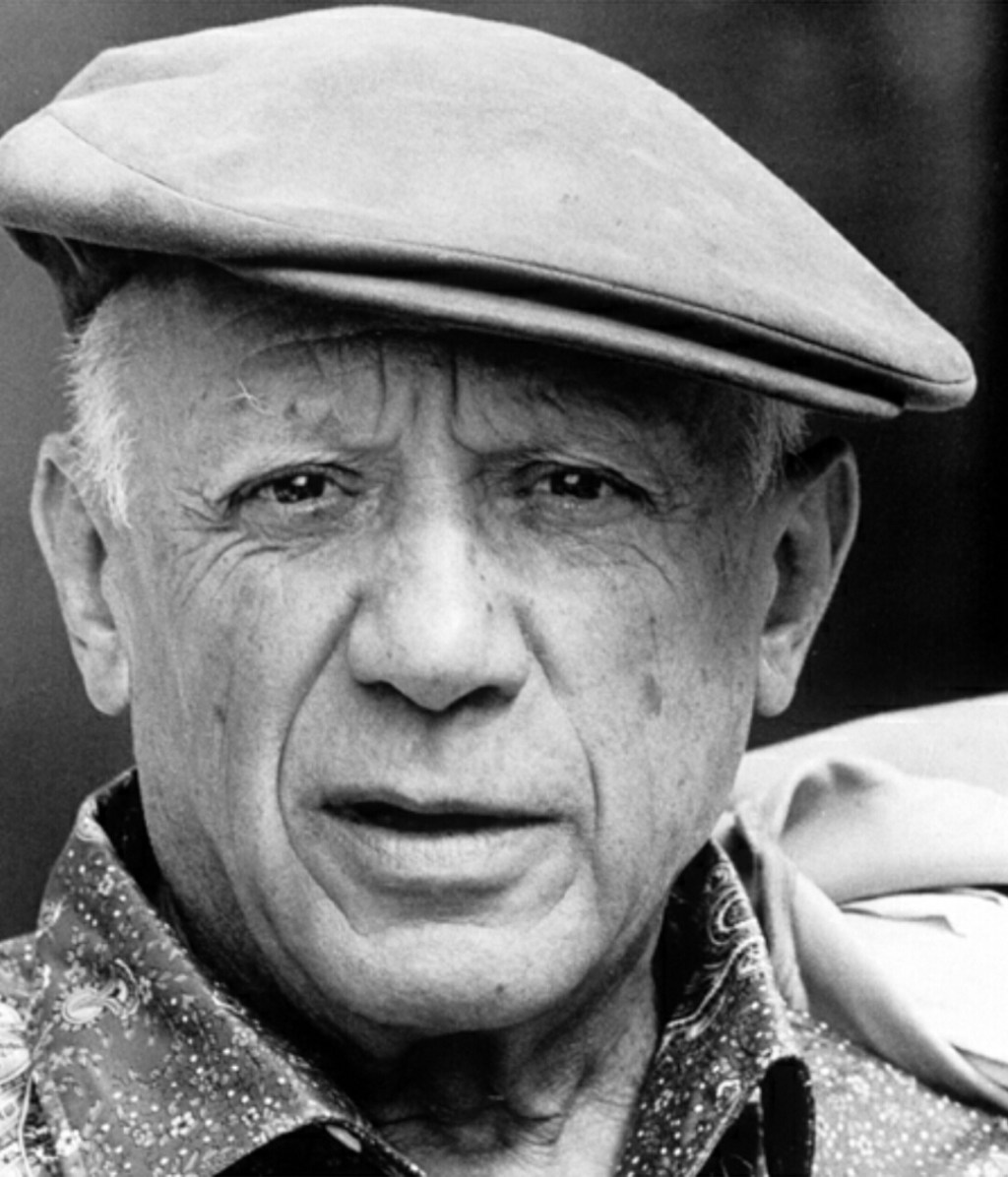
    It might be easy to pick out a modern musician for this question, but the first name that popped into my head was Pablo Picasso, so I’ll stick with that.

    Funny enough, I actually connect with music the most. Growing up, I’d spend endless hours listening to songs on my computer, my MP3 player, and now on my phone or other devices. But when it comes to art in the traditional sense, Picasso was one of the first names that ever stuck with me.

    I first learned about him in 5th grade. His work looked so different — kind of warpy and strange, but also captivating. I remember seeing his paintings in textbooks and learning a bit about his life. There was this story that really stuck with me: Picasso once drew something on a napkin, and when someone asked to buy it, he offered it for a ridiculous amount of money. The person said, “It only took you a few minutes to draw it!” and Picasso replied, “No, it took me my entire life.” The story explains how his ability to create such art even in such a short time came from a lifetime of practice and experience, not from a few minutes of drawing. This resonates with me because that’s how I view honed skills that took years of practice.

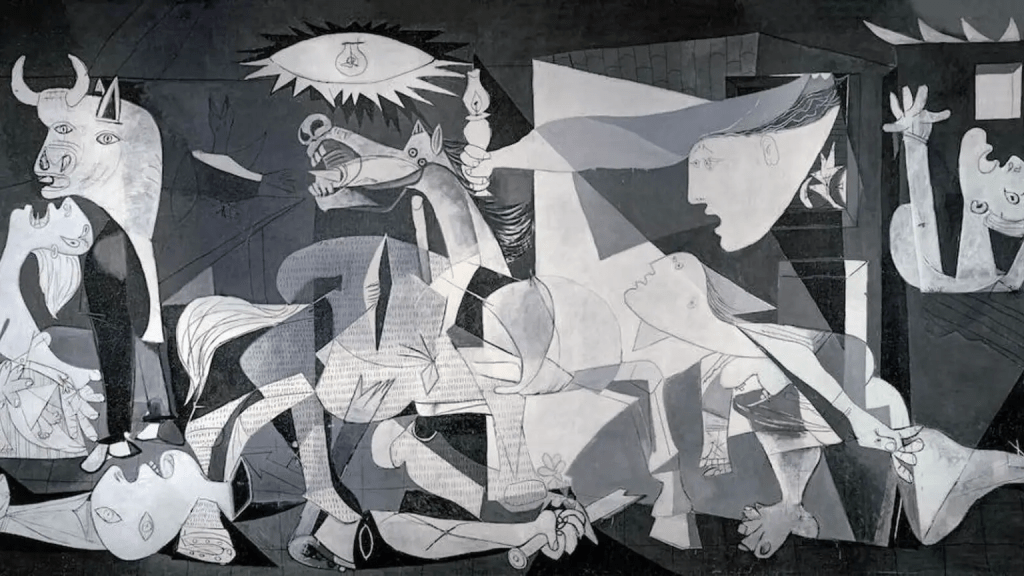
    Pablo Picasso, Guernica, 1937

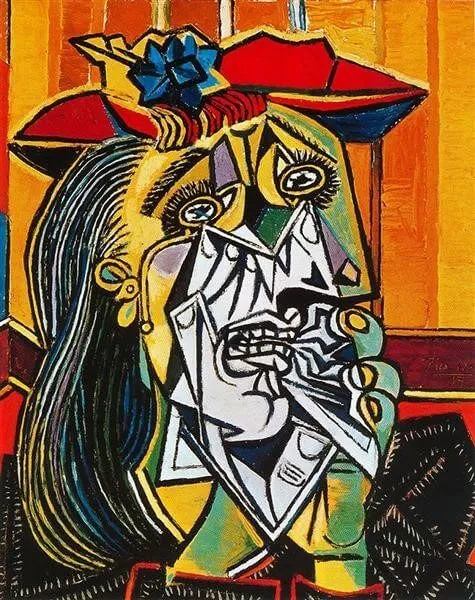
    If I had to name specific works, I’d pick Guernica and The Weeping Woman. I actually had to look them up again because I’d forgotten the titles, but as soon as I saw them, I recognized them right away. There’s something about his style — distorted, emotional, unconventional — that I find oddly relatable. I think my mind kind of works like that sometimes: a bit warped and different from normal.

    Pablo Picasso, The Weeping Woman, 1937

    If I could talk to him, I’d probably ask about that napkin story, and maybe just about his thought process in general. I’m more interested in the person behind the art than the art itself.

    Advertisements
  • Working Out as My Favorite Pastime

    Working Out as My Favorite Pastime

    Daily writing prompt
    What is your favorite hobby or pastime?

    I used to roll my eyes when my dad talked about eating healthy and taking care of my body. Now that I’m older I catch myself doing the same: watching what I eat, exercising, and sleeping well. I can’t believe I’m becoming more like my dad.

    I was active as a kid, taking taekwondo like my son now, and in college I started lifting and never stopped. A few years before COVID I got more serious, but it became more real starting the summer of 2023. I had just flow back from Korea when I felt like I was having a heart attack. That was the moment when I decided I had to turn things around.

    These days I’m addicted to my routine: wake up early for black coffee, massage and stretch my body, warm shower to wake up and warm up. Then it’s 45 minutes of HIIT class at Basecamp. I love the feeling during my workouts when my lungs burn and my body is pumped; I feel strong, young, alive. If I skip my routine, I feel… off. Sore for the entire day.

    After my class, I take my protein mixed with creatine, hit a cold shower as my cryotherapy treatment, and I make sure to get enough sleep at night. Eight hours if possible. Of course, working out every single day (or I try to) like I do isn’t the textbook definition of “healthy”, and I’ve made trade-offs to keep going. I used to be a night owl; now I hit the sack early. I cut back on drinking and junk food. To me, it’s worth it.

    Fitness taught me the simplest rule: if you want a long, healthy life, you have to take care of yourself. No cheat codes. Just reps. Level up, again and again.

    Advertisements
  • Skill I Would Like to Learn

    Skill I Would Like to Learn

    What skill would you like to learn?

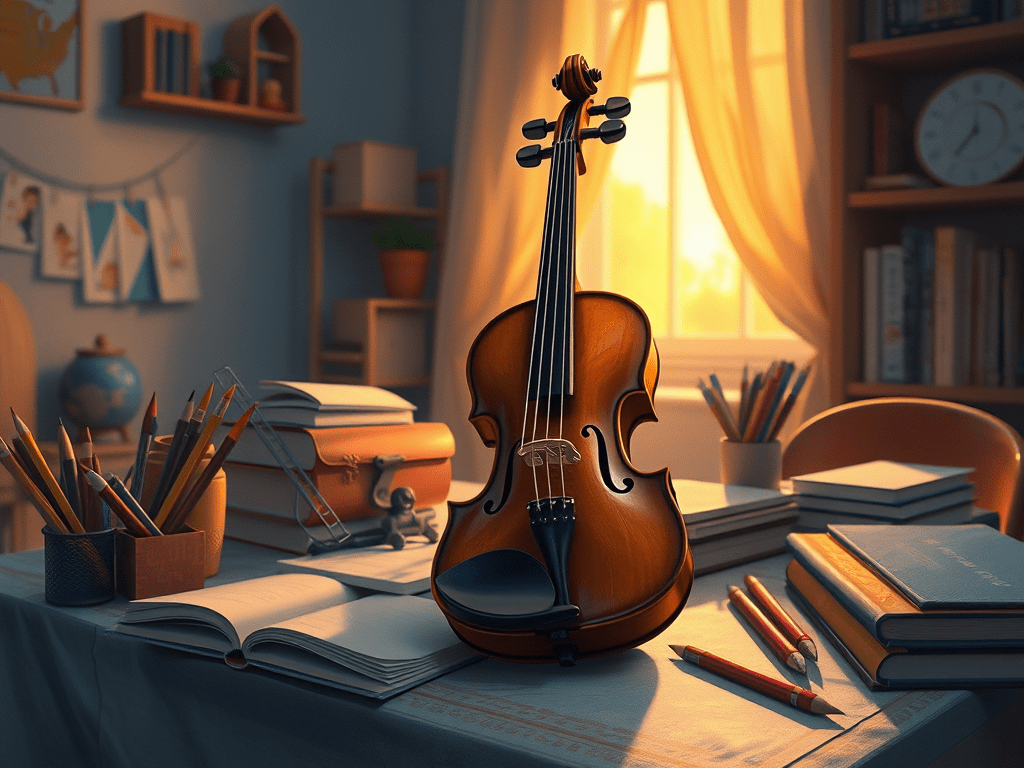
    Sometimes I think about all the skills I wished I had learned growing up. I was a creative kid, always curious about how things worked and eager to make things of my own — to draw, to play the violin, to build robots, to write stories. My parents never quite understood that side of me. They wanted me to focus on academics, to walk a path that was safe and respectable. So I did, even if it meant leaving behind some of those early dreams.

    As an adult, I still feel that small gap inside me — a reminder of the creative boy who wanted to explore and make things just for the joy of it. Life has a way of filling up, though. I have a full-time job, two kids, and an apartment where the sound of a beginner violinist might drive the neighbors crazy. It’s not easy to carve out time for side hobbies anymore. Still, if I ever had more space in my life, I think I’d like to learn the violin. There’s something about its sound — beautiful, soulful — that’s always spoken to me.

    I can imagine the benefits of learning it: using music to unwind after a long day, meeting others who share the same passion, maybe even teaching kids someday. But more than that, it would feel like reclaiming a piece of the creative spark I had as a child. I’ve realized that it’s not too late to pick up new (or old?) dreams — they don’t disappear, they just wait quietly for their turn.

    Some dreams, thankfully, did come true. I grew up loving computers, and I became a software engineer — a career that still lets me create and solve problems in my own way. I even get to work at a video game company, something my younger self would have thought was pure fantasy. Maybe that’s proof enough that the other dreams aren’t so far-fetched after all.

    When I think about the skills I’d like to learn, it’s not really about the violin or writing a book or building a robot anymore. It’s about keeping that creative spark alive, the one that’s been with me since childhood. Maybe one day, when life slows down a little, I’ll finally give that boy’s imagination the time it always deserved.

    Advertisements
  • The Gray Areas Between Good and Bad

    The Gray Areas Between Good and Bad

    Daily writing prompt
    What’s a topic or issue about which you’ve changed your mind?

    I used to believe that the definitions of good and bad were clear and absolute — set in stone, almost like universal truths everyone agreed on. Stealing was bad, helping was good, and that was that. Of course, I knew there were exceptions — like those moral thought experiments where you’re forced to choose between two bad outcomes (google “the trolley problem”) — but I still thought right and wrong were mostly black and white.

    Over the past few years, though, I’ve started to see how blurry those lines can be. Between world events, social movements, and how differently people interpret the same piece of news, I realized that our ideas of good and bad aren’t always shared. Two people can look at the same situation and come away with completely opposite judgments, each believing they’re standing for what’s right.

    This shift didn’t happen overnight. I think the pandemic gave me time to slow down and pay attention — to realize how much perspective shapes belief. I used to think morality was simple; now I see it’s often shaped by culture, experience, and even the communities we’re part of.

    In some ways, I feel more open-minded and empathetic now. But it’s also tiring — trying to understand everyone’s point of view can be overwhelming. I’m learning that being thoughtful doesn’t mean I have to stretch myself thin to accommodate every perspective. Sometimes, it’s okay to protect my own peace.

    Maybe that’s the biggest change of all: realizing that understanding others doesn’t require losing myself in the process.

    Advertisements
  • Learning to Live with Feeling Out of Place

    Learning to Live with Feeling Out of Place

    Daily writing prompt
    Tell us about a time when you felt out of place.

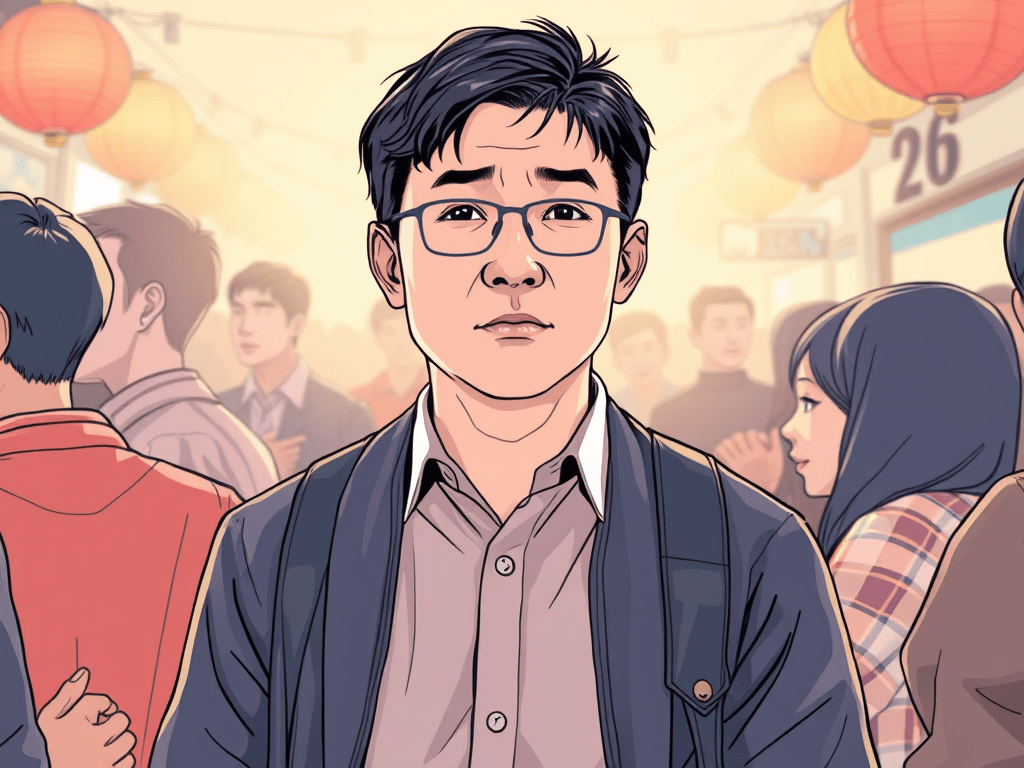
    If I look back on my life, one theme that pops up again and again is the feeling of being out of place. It’s shown up in different ways over the years—sometimes subtle, sometimes painfully obvious—but it’s always been there in one form or another.

    When I was a kid, I moved from my place of birth Paraguay to the U.S., and then later from a city to another city. Both were big shifts, and both left me scrambling to fit in. It’s not easy as a child to navigate a new culture, new classmates, and a different way of doing things. You learn quickly that little differences—what you eat, how you talk, what you know or don’t know—can make you stand out. And when you’re young, standing out doesn’t always feel like a good thing.

    That feeling carried into my work years, too. There’s a certain comfort in working with the same people for a long time, building rhythms and shared understandings. But when you suddenly join a new team, that comfort disappears, and you feel like the odd one out. Post-COVID, it hit me in a new way: walking back into an office after years of remote work felt strange and foreign. Even something as simple as going to a team outing made me aware that I’m now much older than many of my coworkers. That’s not something I used to notice before, but suddenly it stood out.

    And then there’s my personal life. My wife is great at connecting with other parents through our kids’ school activities. I usually leave that to her, and she thrives in those social circles. But when I tag along to a parent gathering, I can feel that familiar awkwardness creep in. She knows people, and I don’t. She’s at ease, and I’m not. It’s not a terrible feeling, but it’s there—the sense that I don’t quite belong.

    Over time, though, I’ve learned not to fight it so much. Being out of place isn’t something you can always fix, and honestly, you don’t always need to. Sometimes I take the awkwardness in stride. Other times, I just avoid the situations where I know I’ll feel that way, and that’s fine too. What I’ve come to realize is that feeling out of place is simply part of life. Everyone experiences it. And once you accept that, it doesn’t feel so heavy anymore.

    It’s not about eliminating the discomfort—it’s about recognizing it, and living with it.

    Advertisements
  • What Would I Do If I Lost All My Possessions?

    What Would I Do If I Lost All My Possessions?

    Daily writing prompt
    What would you do if you lost all your possessions?

    First, let’s be clear: this is about possessions — material things — not people. The way I understand the question family, friends, relationships aren’t included. Thank goodness. That alone changes the tone, because as long as I have the people I love, I’m not truly empty-handed.

    Still, if all my possessions suddenly vanished? My gut reaction would be panic. Imagine waking up and realizing everything you’ve worked for is gone: the car, the computer, the phone, the clothes, the bed, all of it. My face would probably drain white in that instant. But then the practical side of me kicks in: I still rent my apartment (not mine!), so the roof over my head remains. My job isn’t a “possession,” so I still have an income. With that, I could start over.

    Oddly enough, the more I think about it, the more I realize that very little of what I own is truly irreplaceable. All my smart devices? Backed up in the cloud. Photos? Digitized. Valuables? Painful, sure, but I could save up again. The biggest blow would actually be something like my retirement savings. Losing it would mean pushing retirement further out, maybe never reaching it at all.

    After the shock, I think I’d feel something surprising: freedom. We live in a world where we accumulate more and more, stuffing closets and drawers with things we barely touch. I know I’ve got plenty of junk that, if it disappeared tomorrow, I might not even notice. Losing it all might feel like a reset button, a forced way of asking, “What do I really need?”

    Of course, I’d replace the essentials first — clothes, toothbrush, bed. A bed is non-negotiable; good quality sleep is everything to me. Work tools would probably come from my company, so no stress there. And I’d rebuild slowly, but I wouldn’t rush to fill my place back up with stuff the way it is now.

    In the end, possessions don’t define me. They make life easier, sure, but they also weigh me down. What really lasts are the things computers, TVs, and couches can’t replace: relationships, skills, and experiences. If I lost my physical possessions, I think I’d eventually be okay. Maybe even better.

    Sometimes losing it all is the best way to remember what actually matters.